AI Agent Development Cost: 2026 Budget Guide
Estimate AI agent development cost with a practical 2026 framework for scope, integrations, evaluation, infrastructure, operations, and payback.
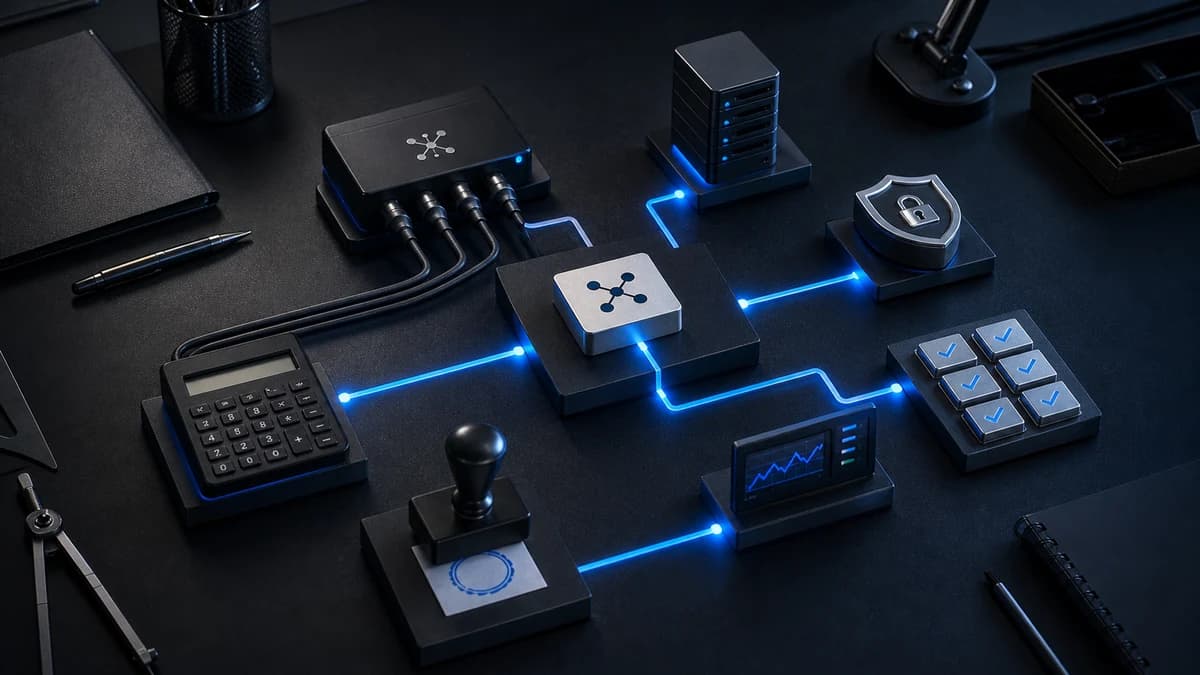 Agent cost system
Decision brief
The short answer
Estimate one completed workflow, not a generic agent. Add implementation hours for discovery, product engineering, integrations, data, evaluation, permissions, deployment, and handoff; then add monthly inference, tools, infrastructure, observability, human review, and maintenance. Compare first-year TCO with realized value after adoption and accepted completion.
Write the trigger, sources, actions, stop boundary, exceptions, owner, volume, and accepted output before requesting a quote.
Calculate model calls, tokens, tool use, retries, review time, infrastructure, and maintenance per accepted workflow completion.
Require a proposal to separate assumptions, implementation workstreams, evaluation, operating cost, exclusions, and expansion gates.
At a glance
What to carry into the decision
- Price one bounded workflow and use first-year total cost of ownership instead of demo cost.
- Treat integrations, evaluation, permissions, human review, observability, and maintenance as first-class budget items.
- Reduce cost with simple architecture, staged permissions, model routing, controlled context, caching, and hard spending limits.
Key Takeaway
An honest AI agent budget cannot be reduced to a price per agent. Define one workflow, estimate implementation by workstream, model monthly cost per completed task, include human review and maintenance, and calculate first-year total cost of ownership. The worked example in this guide uses 620 implementation hours and an illustrative monthly operating model. Replace every assumption with your workflow data and written vendor quotes before making an investment decision.
Search for AI agent development cost and you will find ranges spanning tens or hundreds of thousands of dollars. The range is wide because the label "AI agent" can describe very different systems:
- A demonstration that answers questions from a few documents
- A copilot that drafts work for human approval
- A production agent that reads from several systems and writes back to them
- A governed multi-agent platform with identity, audit, evaluation, recovery, and compliance requirements
Those are not four sizes of the same product. They are different operating systems with different failure costs.
The useful budgeting question is not "How much does an AI agent cost?" It is:
What will it cost to move one named workflow from its current state to a measurable, supportable production system?
This guide gives you a calculator for answering that question.
The Quick Answer: Calculate First-Year TCO, Not Demo Cost
Use this equation as the starting point:
First-year AI agent TCO = implementation cost + 12 x monthly operating cost + contingency
Implementation includes workflow discovery, product and agent engineering, integrations, data preparation, evaluation, permissions, security, deployment, documentation, and handoff.
Monthly operation includes model inference, tool APIs, retrieval and storage, application infrastructure, observability, human review, support, and maintenance.
Contingency covers uncertainty that has not yet been removed through discovery. Do not hide it inside an optimistic fixed price.
OpenAI's business guide to agents distinguishes fixed automation, LLM-powered steps, and agents that adapt, use tools, and update a plan. Price the simplest category that can complete the workflow. A deterministic automation with one model-assisted step can be cheaper and easier to operate than an autonomous agent.
If you have not yet selected the workflow, use the enterprise AI workflow selection scorecard before estimating the build.
Define the Billable Unit: One Completed Workflow
Do not ask a vendor to price "a sales agent" or "an operations agent." Those labels hide the scope.
Write the workflow in this format:
When [trigger], the system reads [approved sources], performs [bounded steps], produces [verifiable output], stops before [high-risk action], and escalates [named exceptions] to [owner].
Example:
When a qualified lead enters the CRM, the system reads the approved company record and public sources, creates a structured research brief, saves a draft to the CRM, and stops before outbound contact. Missing identity, conflicting data, and restricted industries go to revenue operations.
That definition exposes the cost drivers:
- Trigger and volume
- Data sources and access rights
- Number and quality of integrations
- Required reasoning and tool calls
- Output format and acceptance criteria
- Actions the agent may take
- Exceptions and human review
- Logging, recovery, and ownership
Without this boundary, a quote is pricing a story rather than a system.
The Eight Implementation Workstreams
1. Workflow Discovery and Acceptance Criteria
Discovery converts a broad idea into cases the team can build and test.
Useful outputs include:
- Current workflow map and baseline
- Representative normal and exception cases
- Trigger, end state, owner, and escalation path
- Approved data and tool inventory
- Permission boundary
- Acceptance criteria and launch measures
- Explicit exclusions
Skipping discovery does not remove the work. It moves the work into development, where ambiguity becomes rework.
2. Product and Agent Foundation
The foundation is more than a prompt. It may include the user interface, orchestration, state, structured outputs, model gateway, tool contracts, queues, retries, and administrative controls.
OpenAI's practical guide to building agents recommends starting with a single agent and adding multi-agent orchestration only when needed. That is also a cost principle: every additional agent can add handoffs, repeated context, more tool decisions, more failure paths, and a larger evaluation surface.
3. Integrations and Tool Actions
Integrations frequently cost more than the model call.
A read-only connection to a documented API is different from a write-capable connection to a legacy system. For each integration, inspect:
- Authentication and permission model
- API quality, rate limits, and sandbox access
- Stable identifiers and data quality
- Read versus write operations
- Idempotency and duplicate prevention
- Retry and timeout behavior
- Audit and rollback requirements
- Vendor licensing or per-call fees
Count each system and each consequential write path separately.
4. Data, Retrieval, and Memory
RAG is not one feature checkbox. Cost depends on source cleanup, ingestion, document parsing, chunking, metadata, access filtering, indexing, retrieval evaluation, refresh frequency, and retention.
Memory adds another lifecycle: what is stored, for how long, who may read it, and when it is deleted. Full conversation history is easy to implement but can become expensive and noisy as sessions grow.
5. Permissions, Security, and Human Approval
The permission budget should become narrower as consequences rise.
A useful progression is:
Read -> Draft -> Recommend -> Change with approval -> Act within a bounded policy
Production cost grows when the agent can change customer, financial, operational, or regulated records because the system needs stronger authorization, validation, audit, review, and recovery.
OpenAI recommends human intervention when failure thresholds are exceeded and before sensitive, irreversible, or high-stakes actions. The cost of those approval paths belongs in the original estimate, not in a later hardening phase.
6. Evaluation and Quality Assurance
An agent must be tested as a workflow, not only as a final answer.
Evaluation can include:
- Correct tool selection and arguments
- Source and retrieval quality
- Structured-output validity
- Policy and permission compliance
- Final task completion
- Appropriate refusal and escalation
- Cost, latency, and iteration limits
- Recovery after a tool or model failure
Anthropic's 2026 agent evaluation guidance explains that evaluations help teams define success early and maintain a quality bar as the system changes. A quote with no evaluation workstream is usually a prototype quote.
7. Deployment, Observability, and Cost Controls
Production operation needs traces across model calls, tool calls, retrieval, state changes, human approvals, and final outcomes.
AWS's 2026 Agentic AI Lens recommends attributing spend at the agent, workflow, session, and tenant level. That supports a more useful metric than the monthly API bill:
Cost per accepted workflow completion
Add deterministic limits outside the agent loop:
- Maximum model calls per task
- Token and time budget
- Tool-call budget
- Retry limits
- Concurrency limits
- Per-task and daily spending caps
- Automatic cutoff and escalation
These controls prevent a bad prompt, retry storm, or long reasoning loop from becoming a billing incident.
8. Documentation, Handoff, and Operating Ownership
The final system needs an owner who can answer:
- Who reviews quality and cost?
- Who approves prompt, model, tool, and policy changes?
- Who handles failed runs?
- How is access revoked?
- How is the system paused or rolled back?
- What evidence is required before expanding autonomy?
Documentation and handoff are part of the product. A system nobody can safely change is an ongoing liability.
A First-Pass AI Agent Development Cost Worksheet
The allowances below are planning placeholders, not market benchmarks or a ZamDev AI quote. They are designed to expose scope before discovery. Replace them with estimates from the actual team and systems.
| Workstream | First-pass allowance | What usually increases the allowance |
|---|---|---|
| Workflow discovery | 40 to 120 hours | Multiple teams, unclear exceptions, missing baseline |
| Product and agent foundation | 100 to 220 hours | Custom interface, complex state, multi-agent design |
| Read-only integration | 24 to 60 hours each | Weak documentation, custom authentication, rate limits |
| Write-capable integration | 50 to 120 hours each | Approval, idempotency, audit, rollback |
| Data and RAG | 60 to 180 hours | Messy sources, access filtering, frequent refresh |
| Evaluation and QA | 60 to 160 hours | Subjective outcomes, many exceptions, high risk |
| Permissions and audit | 40 to 140 hours | Sensitive data, tenant boundaries, consequential actions |
| Deployment and monitoring | 40 to 100 hours | High availability, private networking, complex telemetry |
| Documentation and handoff | 24 to 60 hours | Multiple operators, formal controls, training |
Calculate the implementation envelope:
Implementation cost = estimated hours x blended delivery rate + third-party setup costs
Use the actual rate from an internal team or written proposal. Do not label a global average as your budget.
Worked Example: A Lead Research and Briefing Agent
Assume the workflow:
- Starts when a qualified lead enters the CRM
- Reads the CRM plus one approved research source
- Produces a structured account brief
- Saves only a draft
- Requires a human before outreach
- Logs sources, tool actions, cost, and reviewer decision
An illustrative implementation estimate might be:
| Workstream | Hours |
|---|---|
| Discovery and acceptance criteria | 60 |
| Product and agent foundation | 140 |
| Two integrations | 120 |
| Data and retrieval | 70 |
| Evaluation and QA | 90 |
| Permissions and audit | 60 |
| Deployment and monitoring | 50 |
| Documentation and handoff | 30 |
| Total | 620 |
The same 620-hour scope produces different implementation budgets at different real rates:
| Blended rate | Illustrative implementation cost |
|---|---|
| $60 per hour | $37,200 |
| $100 per hour | $62,000 |
| $150 per hour | $93,000 |
This is not a price claim. It demonstrates why the scope and evidence matter more than a broad online range. A fixed workflow, read-only access, and objective output can reduce the estimate. Unclear data, legacy systems, high-impact writes, and regulated review can increase it materially.
Calculate Monthly Model and Tool Cost
Model providers price input, cached input, output, and sometimes tools or runtime differently. Check the current official OpenAI pricing, Claude pricing, or Gemini pricing when building the estimate.
Use this formula for each model tier:
Monthly inference cost = tasks x model calls per task x ((input tokens x input rate) + (output tokens x output rate)) / 1,000,000
Then add:
- Search, browser, code execution, or other tool fees
- Embeddings and reranking
- Failed-run and retry allowance
- Batch or priority processing adjustments
- Cache writes, reads, and storage where applicable
Illustrative Inference Calculation
Assume:
- 10,000 tasks per month
- 3 model calls per task
- 8,000 input tokens and 1,000 output tokens per call
- Illustrative rates of $2 per million input tokens and $12 per million output tokens
The calculation is:
- Input: 240 million tokens x $2 = $480
- Output: 30 million tokens x $12 = $360
- Base inference: $840 per month
- Ten percent retry allowance: $84
- Illustrative inference total: $924 per month
The example rates are placeholders, not a recommendation or provider quote. The important inputs are calls per completed task, context size, output size, retry behavior, and the model routing policy.
AWS warns that agent costs can expand through unbounded reasoning, full-history handoffs, unnecessary model supervision, and deep agent hierarchies. Track orchestration and execution separately so a multi-agent design must prove that its extra calls improve accepted outcomes.
Do Not Forget Human Review Cost
Human review is not free, but it can be the correct control.
Use:
Monthly review cost = tasks x review rate x review minutes x loaded hourly cost / 60
For 10,000 tasks, 25 percent review, two minutes per review, and a $25 loaded hourly cost:
10,000 x 0.25 x 2 x $25 / 60 = approximately $2,083 per month
In this example, review costs more than model inference. That is common enough to deserve explicit measurement. Reduce review only when evaluation evidence supports the change, not because the model API looks inexpensive.
Build the Monthly Operating Model
For the worked example, an illustrative operating budget could be:
| Monthly cost category | Example amount |
|---|---|
| Model inference and retries | $924 |
| Tool and data APIs | $300 |
| Database, retrieval, and hosting | $350 |
| Monitoring and alerting | $150 |
| Human review | $2,083 |
| Maintenance and improvement | $1,600 |
| Illustrative monthly total | $5,407 |
At a $62,000 implementation cost, the first-year TCO before contingency would be:
$62,000 + (12 x $5,407) = $126,884
That number is much more useful than "the model costs $924 per month" because it describes the system that must remain dependable.
Calculate Value, Payback, and Cost per Accepted Task
Start with a measured baseline:
- Tasks per month
- Minutes per task
- Loaded labor cost
- Rework and error cost
- Delay cost or lost capacity
- Current software and service cost
- Accepted completion rate
Then calculate:
Monthly gross value = avoided labor + avoided error cost + incremental contribution margin
Monthly net value = monthly gross value - monthly operating cost
Payback period in months = implementation cost / monthly net value
Adjust the value for adoption and accepted completion:
Realized value = projected value x adoption rate x accepted completion rate
Do not count every generated output as value. If the agent creates a draft that a reviewer rejects, the organization paid for the task without receiving the intended outcome.
For a broader build-versus-buy comparison, use the custom AI tools ROI framework.
Seven Quote Red Flags
1. A Price Before a Workflow
A confident price for "one AI agent" without triggers, systems, permissions, cases, and volume is not a scoped estimate.
2. Unlimited Integrations
Every integration has authentication, data, failure, audit, and maintenance behavior. Treating them as interchangeable hides risk.
3. No Evaluation Workstream
If the proposal only includes prompt engineering and a demo, ask how acceptance, regression, tool use, and failure cases will be tested.
4. Token Cost Presented as Total Operating Cost
Inference may be a small part of the monthly budget once tools, review, monitoring, infrastructure, and maintenance are included.
5. Multi-Agent by Default
Ask which measured limitation requires multiple agents. More agents should earn their complexity through better accepted outcomes.
6. Production Access Without Permission Design
Read, draft, approve, and act are different scopes. The proposal should state exactly what can change and how changes are recovered.
7. No Post-Launch Owner
A one-time handoff without operating ownership, observability, and a change process creates hidden future cost.
How to Reduce AI Agent Cost Without Cutting Reliability
Start With One Workflow
Use one trigger, one owner, one accepted output, and a defined exception route. Broad departmental agents are difficult to estimate and evaluate.
Start in Draft or Shadow Mode
Observe or draft before granting write access. This reduces permission and recovery work while the team gathers evidence.
Use Rules Where the Decision Is Deterministic
Do not pay a model to route a condition that ordinary code can evaluate reliably.
Route Tasks by Required Capability
Use the least expensive model that meets the acceptance threshold, then escalate difficult cases. Measure cost per accepted result, not cost per token alone.
Control Context and Memory
Retrieve only relevant context, compress long histories, expire stale memory, and avoid sending the entire tool catalog on every call.
Cache and Batch Repeat Work
Cache stable prompts and tool results where policy and freshness allow it. Batch non-interactive work when provider pricing and latency requirements support it.
Enforce Budgets Outside the Agent
The AWS cost-governance guidance recommends per-cycle, per-task, and per-day limits with automatic cutoffs. An agent should not be able to override its own spending boundary.
Make Every Failure an Evaluation Case
Maintenance becomes cheaper when production failures become repeatable tests instead of recurring investigations.
Build, Buy, or Use a Hybrid
Buy when the workflow is common, the vendor integration is adequate, and your process can fit the product without losing strategic value.
Build when proprietary workflow logic, custom data, integration depth, customer experience, or control creates measurable advantage.
Use a hybrid when a platform can provide models, identity, or connectors while custom software owns the workflow, evaluation, permissions, and user experience.
The cheapest purchase is not always the lowest TCO, and a custom build is not automatically strategic. Compare accepted outcomes, switching constraints, data ownership, operating capability, and the full cost model.
What to Send Before Requesting an AI Agent Quote
Send a one-page brief containing:
- Workflow trigger and end state
- Monthly volume and current handling time
- Users and operating owner
- Required systems and data sources
- Read and write actions
- Normal cases and top exceptions
- Acceptance criteria
- Human approval boundary
- Security, privacy, and compliance constraints
- Expected adoption, operating hours, and latency
- Current baseline cost or delay
- Desired pilot decision date
This gives an engineering team enough information to challenge the architecture, identify unknowns, and propose a phased estimate.
If you want a quote grounded in workflow evidence, send ZamDev AI one workflow brief. We will separate discovery assumptions, implementation workstreams, operating cost, acceptance criteria, and expansion decisions so you can see what you are funding before development begins. You can also review our AI agent development service and production agent architecture guide.
Evidence and scope
What this guide is based on
The hours, rates, usage, and operating amounts are transparent planning examples, not market benchmarks, financial advice, or a ZamDev AI quote. Replace them with measured workflow data, current provider prices, and written delivery estimates.
Intended for: Founders, operations leaders, product owners, and finance teams estimating the implementation and first-year operating cost of a custom AI agent.
Frequently Asked Questions
How much does it cost to build an AI agent in 2026?+
What drives AI agent development cost the most?+
What is the difference between an AI agent prototype and a production agent?+
How do I calculate the monthly cost of running an AI agent?+
How can a business reduce AI agent cost safely?+
Related Articles

AI Agent Pilot Evaluation: A Production Readiness Scorecard for 2026

Where Should Enterprise AI Start? A 7-Factor Workflow Selection Scorecard

Breaking the AI Bug Loop: How to Set Up Automated QA for Vibe-Coded Software

Written by
Zamad Shakeel
Founder & CEO, ZamDev AI · Full-Stack Engineer & AI Systems Builder
Zamad designs and ships AI products, agentic workflows, enterprise automations, and the production controls that make those systems dependable after launch.
linkedin.com/in/zamad-gopang →Turn the decision into a working system.
ZamDev AI helps teams design and deliver AI products, connected automations, knowledge systems, and production improvements with a clear scope and measurable acceptance criteria.
Or WhatsApp us directly: +92 328 635 6880